In January, the World Economic Forum ranked “geoeconomic confrontation” as the world’s most severe risk for 2026. Whether coercive tariffs, export controls, investment restrictions, sanctions, or subsidies, these rediscovered weapons of economic war threaten to undo decades of stability and prosperity. They also risk tipping the world into crisis.
For Australia, where trade is equivalent to 47 per cent of GDP, this is a particularly critical vulnerability. Our next major shock is more likely to come from geopolitical contestation, compounded by our own lack of preparedness, than from a natural hazard or pandemic. Safeguarding our prosperity and security demands that we recognise this shift and act on it.
Australia’s economic success has been built on the stability and certainty provided by the rules-based trading system. Clear rules and open markets enabled Australian exporters to expand globally with world-class goods and services. They also gave Australian consumers and industry access to a wide array of new goods, services, and suppliers.
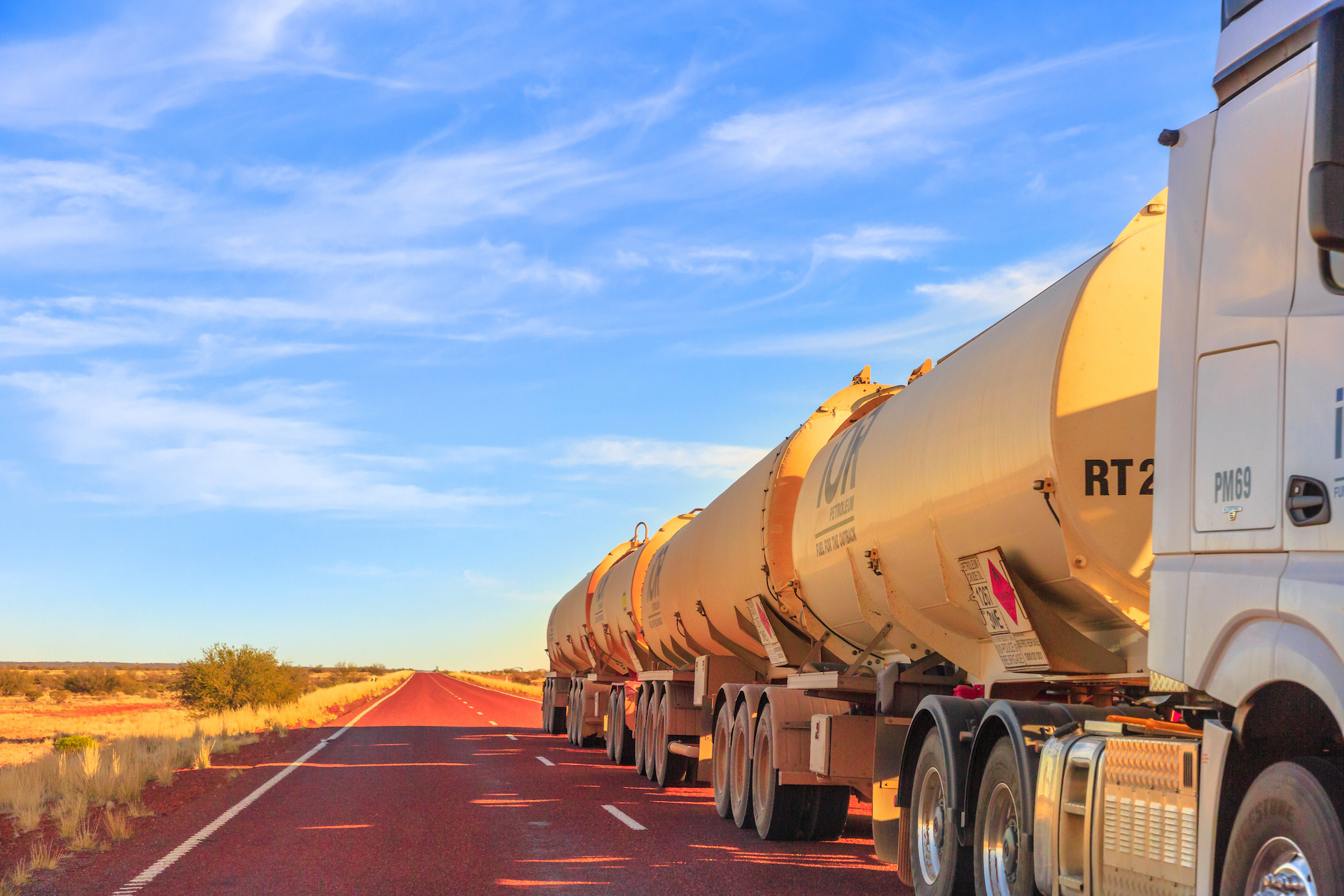
But these benefits came with new risks. As a nation, we became increasingly reliant on the smooth functioning of international supply chains. Whether refined fuels, key fertilisers or pharmaceuticals, trade disruptions can rapidly cascade to affect ordinary Australians. Australia imports the vast majority of fuel sold at petrol stations and sits at the “tail end” of global pharmaceutical supply chains. The 2021 AdBlue shortage showed how disruption to a single imported additive can threaten the national freight system.
Australia’s strategic environment compounds our exposure. The US is our principal security ally, China is our largest trading partner, and our economy is increasingly integrated into ASEAN, North Asia and India. These connections are a clear source of advantage, but also place Australia squarely on the world’s deepest economic fault line. When the world’s two largest economies collide, Australia will inevitably feel the shockwaves.
And the risks are growing. The United States’ now open disregard for traditional trade rules, including its trade agreement with Australia, threatens the framework that has underpinned Australia’s economic success. Washington’s moves in recent ‘reciprocal trade’ agreements to compel other economies to replicate its approach are also a harbinger of worse to come. If rules fail and other governments start treating their trade commitments as optional, Australia’s access to foreign markets will become a matter of political leverage rather than legal right.
Facing up to this geostrategic environment requires action on at least four fronts.
First, the Government needs to create certainty amid the volatility through new and enhanced agreements with like-minded partners. The inaugural dialogues between the Comprehensive and Progressive Agreement for Trans-Pacific Partnership (CPTPP) and the European Union (EU) and the Association of Southeast Asian Nations (ASEAN), launched in Melbourne last year, were a promising start. But these need to be accelerated to deliver credible signals in support of the rules and concrete outcomes for industry.
Second, we need to rethink our traditional template for trade agreements and start writing the new rules needed for modern challenges. This means integrating supply chain resilience and trusted trade measures into these arrangements, including supply chain mapping, cooperation mechanisms, and mutual guarantees of continued supply during a crisis. Singapore and New Zealand’s 2025 Agreement on Trade in Essential Supplies, as well as Australia’s own experience in the Biden-era Indo-Pacific Economic Framework for Prosperity, provide solid models to build upon with new partners.
Third, Australian businesses, particularly those in critical industries or providing critical infrastructure, need to operationalise geoeconomic resilience. We need to move beyond generic risk registers and tick box compliance towards active horizon scanning and crisis planning for worst-case scenarios such as shipping lane closures, export bans on critical inputs, or new sanctions cutting off established markets.
Finally, and perhaps most importantly, the government needs to prepare a comprehensive National Risk Assessment and share it with business and the wider community. Without a common understanding of the threats we face, our preparedness and resilience efforts will remain fragmented rather than coordinated and reinforcing.
The fractures in the global trading order are deepening, and Australia is not prepared for what may come next. As Canada’s Prime Minister said at Davos, nostalgia is not a strategy. Instead, we need to work to save the parts of the system that still work, actively shape what is coming next, and prepare as a society for the disruption before it arrives.